Lab manuals, alongside solution manuals, are crucial for anatomy and physiology students, offering detailed exercises and answers. These resources enhance comprehension and practical skills.
Specifically, a solution manual for Connie Allen & Valerie Harper’s 7th edition provides definitions and answers, aiding in understanding complex topics like enzymes.
Co and Engebretson’s instructor manual outlines lab objectives and provides answers, supporting effective teaching and student learning within the course framework.
Purpose of Lab Manuals
Anatomy and physiology lab manuals serve as foundational tools, bridging theoretical knowledge with practical application. They are meticulously designed to guide students through hands-on experiences, fostering a deeper understanding of the human body’s intricate systems. These manuals aren’t merely collections of exercises; they are structured learning pathways.
The primary purpose is to develop observational skills through activities like microscopy and histology, enabling students to identify tissues and structures accurately. Furthermore, they facilitate the application of learned concepts, such as understanding blood components or lung capacity, through direct experimentation.
A solution manual, like those available for the Allen & Harper 7th edition, complements this process by providing verified answers and explanations. This ensures students can self-assess their understanding and correct any misconceptions. Instructor manuals, such as those by Co and Engebretson, further support this by offering detailed guidance for educators.
Importance of Solution Manuals
Solution manuals are indispensable companions to anatomy and physiology lab manuals, offering critical support for student learning and comprehension. They provide detailed answers to pre-lab questions, exercise data analysis, and interpretations of complex histological images, solidifying understanding.
These manuals are particularly valuable when tackling challenging concepts like carbohydrate metabolism or distillation processes, as highlighted in resources for the Allen & Harper 7th edition. They act as a safety net, allowing students to verify their work and identify areas needing further study.
Moreover, solution manuals aid in troubleshooting common lab errors, preventing frustration and promoting a more effective learning experience. Instructor manuals, like those from Co and Engebretson, often include detailed explanations that enhance the value of student solutions.
Key Concepts in Anatomy and Physiology
Understanding cell structure, tissue types, and homeostasis are foundational. Lab manuals reinforce these concepts through practical exercises and detailed anatomical investigations.
Cell Structure and Function
Cell structure and function form the bedrock of anatomy and physiology, and lab exercises are vital for grasping these concepts. Lab manuals guide students through microscopic observation, identifying organelles like the nucleus, mitochondria, and ribosomes.
Understanding the role of the plasma membrane in transport – diffusion, osmosis, and active transport – is crucial. Solution manuals provide answers to pre-lab questions, clarifying these processes before practical application.
Lab activities often involve examining different cell types – epithelial, connective, muscle, and nervous – and relating their structure to their specific functions within the body. These manuals offer detailed illustrations and explanations.
Furthermore, understanding cellular respiration and protein synthesis is essential. Lab reports require analysis of observations, and solution manuals assist in interpreting results and drawing accurate conclusions about cellular processes.
Tissue Types (Epithelial, Connective, Muscle, Nervous)
Anatomy and physiology labs heavily emphasize tissue identification, requiring students to differentiate between the four primary types: epithelial, connective, muscle, and nervous. Lab manuals provide histological images for study, alongside descriptions of key characteristics.
Epithelial tissues are categorized by shape (squamous, cuboidal, columnar) and layering, while connective tissues are classified by matrix composition (dense, loose, cartilage, bone). Solution manuals aid in correctly identifying these distinctions.
Muscle tissues – skeletal, smooth, and cardiac – are distinguished by their microscopic appearance and functional properties. Nervous tissue involves identifying neurons and glial cells. Lab exercises focus on relating structure to function.
Analyzing histological images and answering pre-lab questions are crucial. Solution manuals offer detailed explanations and correct answers, reinforcing understanding of tissue organization and its impact on organ systems.
Homeostasis and Feedback Mechanisms
Anatomy and physiology labs often explore homeostasis through experiments demonstrating feedback loops – essential for maintaining internal stability. These labs frequently involve monitoring physiological parameters and analyzing responses to stimuli.
Students learn to distinguish between negative and positive feedback mechanisms, understanding their roles in regulating body temperature, blood glucose, and other vital functions. Lab manuals present scenarios requiring analysis of these processes.
Solution manuals provide answers to questions assessing comprehension of feedback loop components: receptor, control center, and effector. They clarify how disruptions to these loops lead to disease states.
Exercises may involve simulating homeostatic imbalances and predicting the body’s corrective responses. Correctly interpreting experimental data and applying feedback principles are key skills reinforced by lab work and solution manual support.
Lab Exercises: A Detailed Overview
Lab exercises cover microscopy, dissections, and system identification, utilizing manuals for guidance. Solution manuals offer answers, aiding comprehension of complex anatomical and physiological concepts.
Microscopy and Histology
Microscopy and histology lab exercises are foundational in anatomy and physiology, requiring precise observation and identification of tissues. Lab manuals provide prepared slides and guidance for using microscopes effectively.
Solution manuals become invaluable when analyzing histological images, offering answers to identification questions and clarifying cellular structures. Students utilize these resources to confirm their observations and understand tissue characteristics.

Exercises often involve identifying epithelial, connective, muscle, and nervous tissues under varying magnifications. The manuals detail expected appearances, while solution manuals provide correct identifications, aiding in mastering microscopic anatomy.
Understanding staining techniques and their impact on visualization is also crucial, and solution manuals often explain these principles, enhancing the learning experience.
Skeletal System Identification
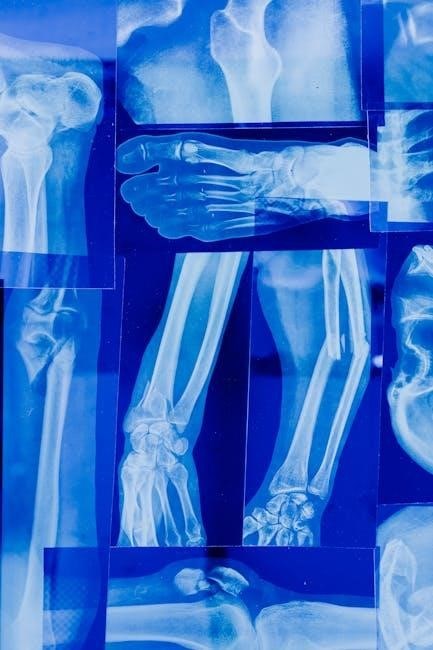
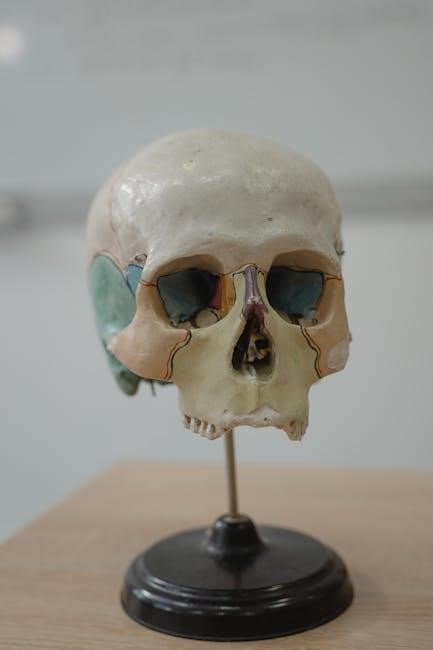
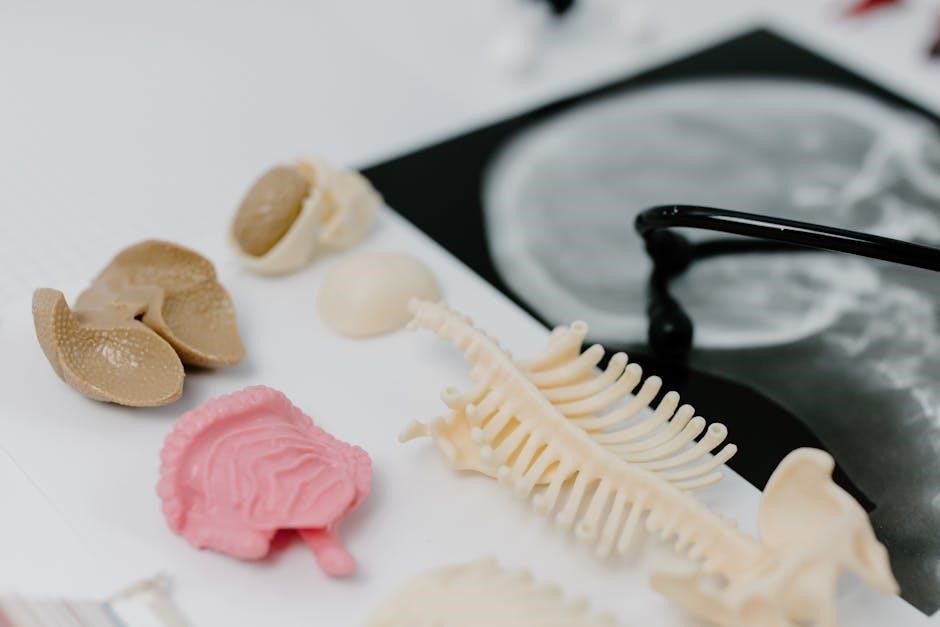
Skeletal system lab exercises focus on identifying bones, bony landmarks, and different types of joints. Lab manuals typically include diagrams and articulated skeletons for practical study. Accurate identification is key to understanding anatomical relationships.
Solution manuals are essential for verifying bone identifications, especially when dealing with numerous and similar structures. They provide correct answers to lab questions, reinforcing learning and clarifying any confusion.
Exercises often involve classifying bones (long, short, flat, irregular) and identifying features like processes, foramina, and fossae. Manual solutions offer detailed explanations of these features and their functions.
Furthermore, understanding joint types (fibrous, cartilaginous, synovial) and their movements is crucial, and solution manuals provide accurate classifications and functional descriptions.
Muscular System Anatomy and Physiology
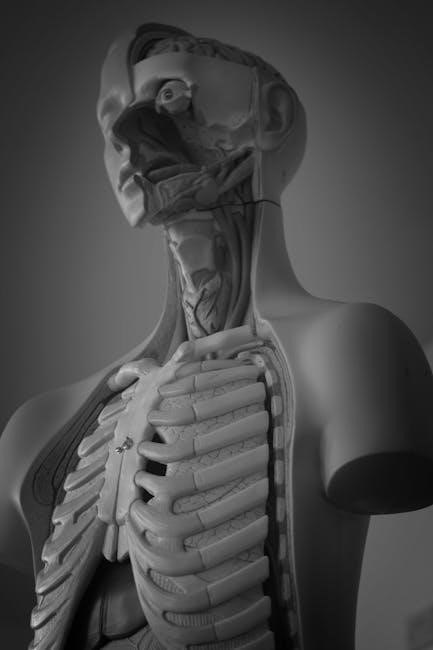
Muscular system labs involve identifying major skeletal muscles, understanding their origins, insertions, actions, and innervations. Anatomy lab manuals provide diagrams and often require students to palpate muscles on themselves or partners.
Solution manuals are invaluable for confirming correct muscle identifications and understanding complex actions. They offer detailed explanations of muscle functions and how they contribute to specific movements.
Lab exercises frequently include studying muscle fiber types (skeletal, smooth, cardiac) under a microscope, and manual solutions aid in differentiating these based on histological characteristics.
Understanding muscle contraction mechanisms, including the role of sarcomeres and neurotransmitters, is also vital, and solution manuals provide clear explanations and answers to related questions.
Nervous System Dissection and Function
Nervous system labs often involve sheep brain dissections to identify key structures like the cerebrum, cerebellum, and brainstem. Anatomy and physiology lab manuals guide students through these dissections, detailing the function of each part.
Solution manuals are essential for verifying correct structure identification during dissections and understanding the complex functions of different brain regions. They clarify the roles of lobes and associated areas.
Lab exercises also explore nerve impulse transmission and synaptic function, often using models or simulations. Manual solutions provide detailed explanations of action potentials and neurotransmitter interactions.
Understanding cranial nerves and spinal cord structure is crucial, and solution manuals offer answers to questions about their origins, pathways, and functions, aiding in comprehensive learning.
Cardiovascular System: Blood and Heart
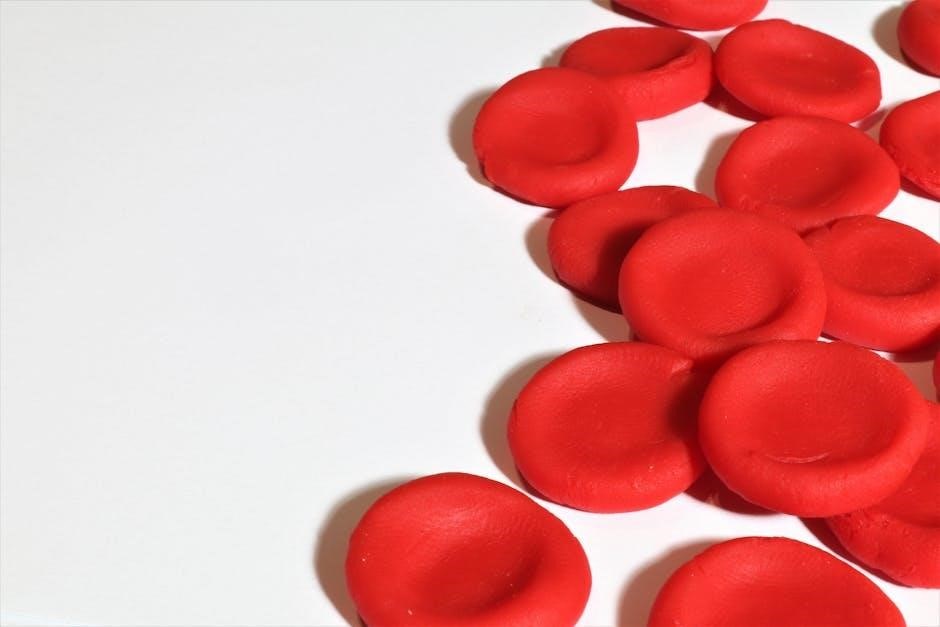
Cardiovascular labs commonly involve examining blood samples under a microscope to identify blood cells – erythrocytes, leukocytes, and platelets – and understanding their functions. Anatomy and physiology lab manuals provide detailed procedures for blood typing and analyzing blood disorders.
Solution manuals assist in correctly identifying blood cell types and interpreting blood analysis results, ensuring accurate understanding of hematological concepts. They clarify the significance of different blood parameters.
Heart dissections are also frequent, requiring students to identify chambers, valves, and major blood vessels. Manual solutions confirm correct anatomical identification and explain blood flow pathways.
Exercises often include measuring heart rate and blood pressure, and solution manuals provide expected values and explanations for variations, enhancing practical skill development and comprehension.
Respiratory System: Lung Capacity and Gas Exchange
Respiratory lab exercises frequently involve measuring lung capacities – tidal volume, inspiratory reserve volume, expiratory reserve volume, and vital capacity – using spirometers. Anatomy and physiology lab manuals detail the proper techniques for these measurements and calculations.
Solution manuals provide expected values for lung capacities based on factors like age, sex, and height, aiding in accurate data interpretation and identifying potential respiratory abnormalities. They clarify calculation errors.
Understanding gas exchange – oxygen and carbon dioxide diffusion – is crucial. Lab activities may involve modeling gas exchange or analyzing its efficiency under different conditions.
Manual solutions explain the principles of partial pressure gradients and how they drive gas exchange, ensuring students grasp the physiological mechanisms involved in respiration and oxygen delivery.

Utilizing Solution Manuals Effectively
Solution manuals clarify pre-lab questions, analyze exercise data, interpret histological images, and troubleshoot errors, enhancing understanding of anatomy and physiology lab exercises.
Understanding Pre-Lab Questions
Pre-lab questions within anatomy and physiology lab manuals are designed to prepare students for successful experiment completion and reinforce foundational knowledge. A solution manual becomes invaluable here, offering detailed explanations and clarifying concepts before practical application.
These questions often assess understanding of theoretical principles underlying the lab exercise, such as the purpose of specific staining techniques in histology or the physiological basis of muscle contraction. Utilizing a solution manual allows students to identify knowledge gaps and proactively address them.
Furthermore, reviewing answers in the manual helps students anticipate potential challenges during the lab, fostering a more focused and efficient learning experience. It’s not about simply copying answers, but about understanding the reasoning behind them, solidifying comprehension of core anatomy and physiology principles.
Analyzing Exercise Data
Analyzing data generated during anatomy and physiology lab exercises is a critical skill, and solution manuals provide essential support. These manuals don’t simply present correct answers; they often detail the expected trends and potential sources of error, guiding students through the interpretation process.
For example, when measuring lung capacity, a solution manual might explain expected values and discuss how factors like height, age, and sex can influence results. This contextualization is vital for understanding deviations from the norm and drawing meaningful conclusions.
Furthermore, solution manuals can assist in identifying and addressing calculation errors or misinterpretations of measurements. By comparing student results to the provided solutions, students can refine their analytical skills and develop a deeper understanding of the physiological principles demonstrated by the experiment.
Interpreting Histological Images
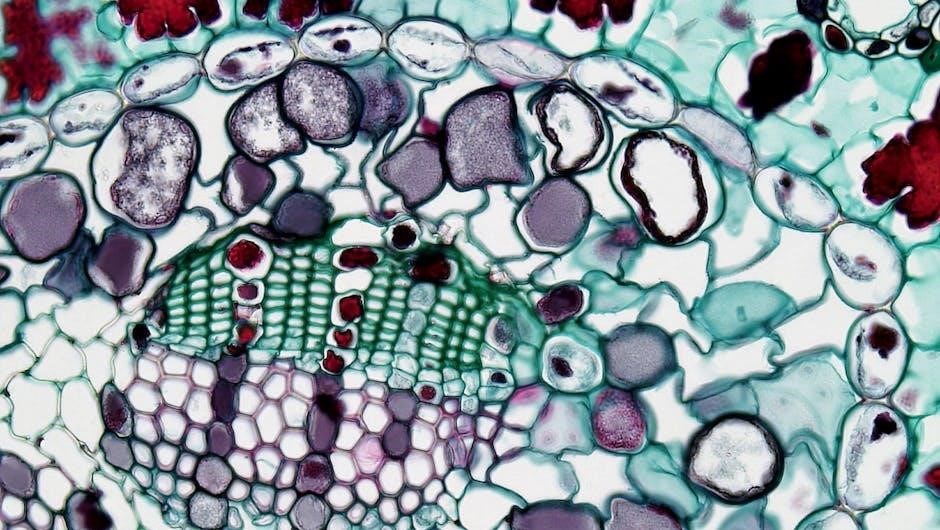
Histology, the study of tissues, relies heavily on microscopic image analysis, and anatomy and physiology lab manuals often include numerous histological slides. Solution manuals are invaluable when learning to correctly identify structures within these images, offering detailed annotations and explanations.
These manuals go beyond simply labeling components; they explain the functional significance of each structure and how its appearance relates to its role in the body. For instance, a manual might detail how the arrangement of cells in epithelial tissue reflects its protective or absorptive function.
Furthermore, solution manuals can help students differentiate between similar tissue types and recognize common artifacts that may appear in histological preparations. This skill is crucial for accurate diagnosis and understanding of disease processes, making the manual a powerful learning tool.
Troubleshooting Common Lab Errors
Anatomy and physiology lab work, while educational, is prone to errors. Solution manuals often dedicate sections to addressing these common pitfalls, providing students with guidance on identifying and correcting mistakes. These resources are vital for reinforcing the scientific method and promoting critical thinking.
For example, a manual might explain why a staining procedure didn’t yield expected results, detailing potential issues with reagent concentration, incubation time, or slide preparation. It could also address errors in data collection or analysis, offering strategies for improving accuracy.
Beyond simply providing correct answers, these manuals encourage students to understand why errors occur, fostering a deeper understanding of the underlying principles. This proactive approach transforms mistakes into learning opportunities, enhancing the overall lab experience and solidifying comprehension.
Specific Lab Manual Editions & Resources
Connie Allen & Valerie Harper’s 7th edition solution manual offers detailed answers, while Co and Engebretson’s instructor manual aids teaching.
Visual Anatomy & Physiology Lab Manuals provide comprehensive guides for students, enhancing their understanding of complex biological systems.
Connie Allen & Valerie Harper 7th Edition
The 7th edition lab manual by Connie Allen and Valerie Harper is a widely used resource in anatomy and physiology courses, known for its clear explanations and practical exercises. A corresponding solution manual is invaluable for students seeking to deepen their understanding and verify their work.
This solution manual provides detailed answers to the questions posed within the lab manual, covering a broad spectrum of topics. These include fundamental concepts like carbohydrates and enzymes, as well as more complex processes such as distillation. It’s designed to help students navigate challenging material and build a solid foundation in the subject.
The resource isn’t simply about providing answers; it’s about fostering comprehension. By studying the solutions, students can learn the reasoning behind each answer, improving their problem-solving skills and preparing them for exams. It’s a critical tool for mastering anatomy and physiology concepts.
Co and Engebretson Instructor Manual

The Instructor Manual accompanying Co and Engebretson’s Anatomy & Physiology Lab Manual serves as a comprehensive guide for educators. It provides detailed answers and explanations for all lab exercises, ensuring accurate and consistent instruction; This resource is crucial for effectively supporting student learning and assessment.
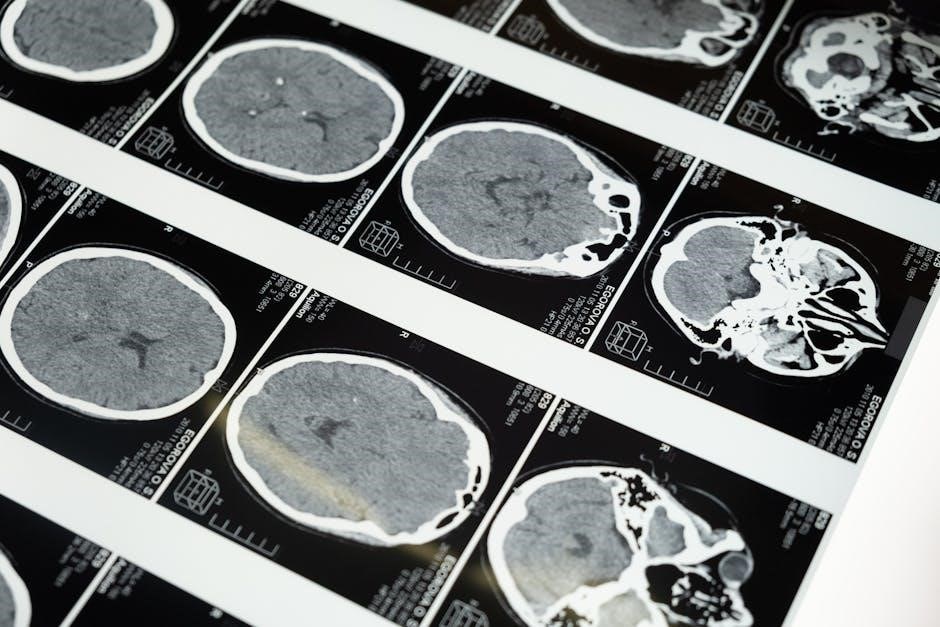
Lab 1, focusing on the introduction to the human body, is thoroughly addressed within the manual. It outlines the purpose and perspective of the lab, clearly defines lab objectives, and provides a detailed outline of the activities. Crucially, it includes complete answers to discussion questions, facilitating meaningful classroom engagement.
The manual’s strength lies in its ability to clarify complex concepts and offer guidance on troubleshooting potential student difficulties. It allows instructors to confidently deliver lab sessions and provide students with the support they need to succeed in their anatomy and physiology studies.
Visual Anatomy & Physiology Lab Manuals
Visual Anatomy & Physiology Lab Manuals, like those by Martini, Frederic H., offer a distinct approach to learning, emphasizing visual aids and hands-on activities. These manuals are designed to enhance understanding through detailed illustrations and practical exercises, supporting students in mastering complex anatomical structures and physiological processes.
Resources include both hardcover versions and options focusing on specific animal models, such as the pig version, catering to diverse course requirements. These manuals often accompany supplementary materials like photographic atlases and interactive lab simulations, providing a multi-faceted learning experience.
The availability of these manuals, alongside broader anatomy and physiology lab resources, underscores the importance of practical application in understanding the human body. They provide students with the tools needed to confidently navigate lab exercises and solidify their knowledge.